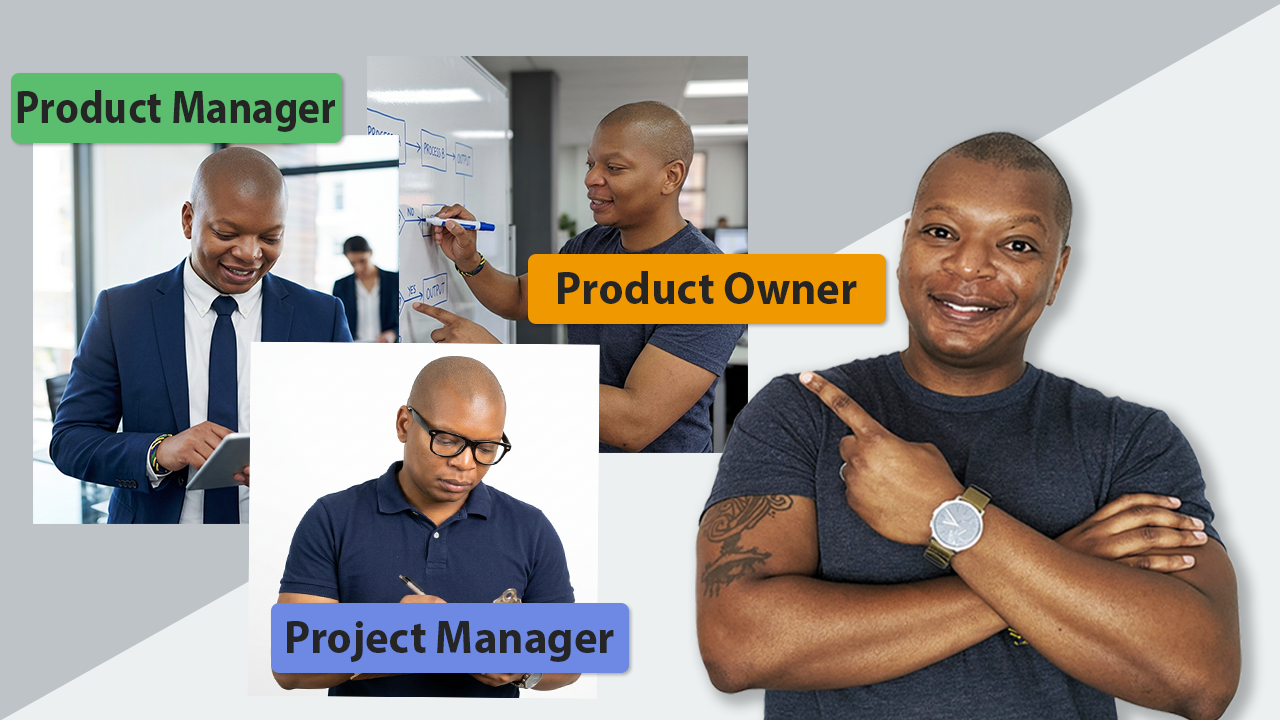
Product Manager vs. Product Owner vs. Project Manager: What’s the Difference?
If you’ve been browsing job boards trying to land a role in tech, you’ve likely run into three job titles that sound almost identical on the surface: Product Manager, Product Owner, and Project Manager.
People frequently use these terms interchangeably in casual conversation, but in practice, their day-to-day responsibilities, required skill sets, and core metrics for success are fundamentally different. Applying to the wrong one can lead to frustration, missed interviews, or landing in a position that doesn’t align with what you actually enjoy doing.
To make things clear, let’s break down how these roles differ, how they look in real tech environments, and how to decide which path fits you best.
The Restaurant Analogy: Understanding the Core Roles
Imagine you are opening a brand-new restaurant. To launch successfully, you need three distinct leaders in the building:
- The Product Manager (The Concept Developer): They study the neighborhood, analyze dining trends, and decide: “We need an authentic Italian pasta spot here because there isn’t one within five miles.” They own the strategy, the market viability, and the overall vision (The “Why” and “What”).
- The Product Owner (The Head Chef): They take that concept and translate it into actual recipes, prioritize which dishes to prep for dinner service, and give clear, step-by-step instructions to the line cooks (The “How” and “Details”).
- The Project Manager (The General Manager / Construction Lead): They don’t write recipes or design the menu. Instead, they ensure kitchen equipment arrives on schedule, construction permits pass inspection, and the doors open on time without exceeding the budget (The “When” and “Logistics”).
How Each Role Works in Tech
Depending on whether a company is building consumer-facing software or handling enterprise IT solutions, these roles show up in distinct ways.
| Role | Commercial Software Team | Enterprise Tech & Platform Team |
| Product Manager | Researches user behavior to design user-facing app features (e.g., adding a stories/reels feed to boost daily app usage). | Partners with internal business leaders to identify operational bottlenecks (e.g., evaluating if migrating to Salesforce will improve sales efficiency). |
| Product Owner | Writes detailed user stories, prioritizes sprint backlogs, and tests prototype UI designs alongside developers before release. | Configures internal workflows, maps custom data fields, and writes precise specs for engineers integrating tools like DocuSign. |
| Project Manager | Coordinates cross-departmental rollouts across engineering, design, marketing, and legal to meet a target public release date. | Manages timelines, vendor contracts, budget constraints, and risk logs when deploying platform updates to thousands of employees. |
Which Path Is Right for You?
Choosing the right role comes down to matching your natural strengths with the core focus of the position:
- Target Product Management if: You love high-level strategy, studying consumer psychology, analyzing market trends, and defining big-picture solutions.
- Target Product Ownership if: You excel at technical execution, love getting into the granular details, organizing workflows, and collaborating directly with software engineers.
- Target Project Management if: You are hyper-organized, love managing schedules, tracking deliverables, mitigating risks, and keeping multi-department teams aligned.